
The Shift from Talkers to Doers: Why "Agentic" Voice AI is the Biggest Tech Trend of 2026
We are officially moving past the era of chatbots that simply answer questions. The defining tech trend of 2026 is "Agentic AI"—voice-activated systems that can reason, plan, and autonomously execute complex, multi-step workflows. Discover how the technology is evolving and how local innovators are bringing these futuristic systems into reality.
By Isaii Team

The End of the Scripted Chatbot
If you’ve interacted with a customer service bot or a voice assistant in the last few years, you are familiar with "Generative AI." It’s impressive technology, but fundamentally, it is a talker. You ask a question; it retrieves an answer based on its training data or a rigid script. If you ask it to actually do something outside of that script, it usually hands you off to a human agent.
According to industry analysts, 2026 marks the tipping point where we transition from Generative AI to Agentic AI.
Gartner predicts that by 2028, at least 15% of everyday business decisions will be made autonomously by AI agents—a massive leap from nearly 0% just two years ago. The global market for these autonomous systems is projected to surge past $10 billion this year, driven by a simple promise: AI is finally graduating from a conversational tool to a digital workforce capable of execution.
What Makes an AI "Agentic"?
An Agentic Voice AI doesn't just say, "I can help you with that." It actually does the work.
Consider a typical travel scenario. A standard voicebot can tell you if a hotel room is available. An Agentic voice system, however, will:
-
Check the room availability.
-
Cross-reference your loyalty status to negotiate a free upgrade.
-
Book the reservation in the hotel's backend system.
-
Schedule a ride-share pickup for your arrival time.
All of this happens autonomously from a single voice command, without human intervention. This requires a system that can reason through obstacles, plan multiple steps, and interact with various external software APIs simultaneously.
The Rise of Multi-Agent Systems (MAS)
To pull off these complex workflows, the architecture behind AI is fundamentally changing. In 2026, developers are moving away from relying on a single, massive "know-it-all" AI model. Instead, they are deploying Multi-Agent Systems (MAS).
Just as a human enterprise operates with specialized departments, modern AI architecture relies on a network of specialized digital agents working in tandem.
-
The Dispatcher: Analyzes the user's vocal intent and routes the task.
-
The Technical Agent: Handles troubleshooting and complex logic.
-
The Billing Agent: Securely processes transactions and updates databases.
When a user switches from asking a technical question to requesting a refund, the context is seamlessly passed between these specialized digital "nodes". This modular approach is faster, highly accurate, and much easier for enterprises to govern.
Hyper-Personalization: Emotion AI and Biometrics
The final piece of the 2026 Voice AI puzzle is how these systems actually sound and listen. The rigid, one-size-fits-all robotic voice is dead.
The next generation of AI leverages Emotion AI (Sentiment Analysis) to adapt in real-time. By analyzing vocal cues like pitch, tone, speed, and pauses, modern systems can instantly detect user frustration or hesitation. If a user sounds confused, the agent will automatically slow its speaking pace and simplify its vocabulary. If a user is rushing, the AI switches to concise, bullet-point communication.
Furthermore, Voice Biometrics are rapidly replacing clunky security questions. In highly regulated industries like finance and healthcare, a user's unique vocal print serves as their password, allowing AI to authenticate them in seconds.
Bringing the Future into the Present
You don't have to look to Silicon Valley to see these trends materialize. The technology required to build and deploy Agentic AI is being engineered locally.
At Isaii Technologies, we aren't just observing these trends; we are building the infrastructure for them. Our specialized Voice AI product, Isaii Whispher, is designed to be integrated wherever you need it—from manufacturing floors to digital retail interfaces.
Whether it is developing custom AI layers that automate backend workflows or building bespoke mobile and web applications that serve as the interface for these powerful new tools, the future of autonomous execution is here.
The question for businesses is no longer, "Should we adopt Voice AI?" The question is, "How quickly can we deploy Agentic AI to lead our market?"
Next step
Interested in working together?
Tell us about your product or idea — we'd love to hear from you.
Continue reading
More articles
Custom AI Solutions
The Great SaaS Trap: Why Off-the-Shelf Subscriptions Are Clowning Your Enterprise BudgetWe all love a good meme about software expectations versus reality. But there is nothing funny about the hidden "SaaS Tax" draining your company's budget. It is time to compare the true 3-year cost of renting generic, disconnected software subscriptions against the massive ROI of owning a unified custom ecosystem from Isaii Technologies.
5 Min Read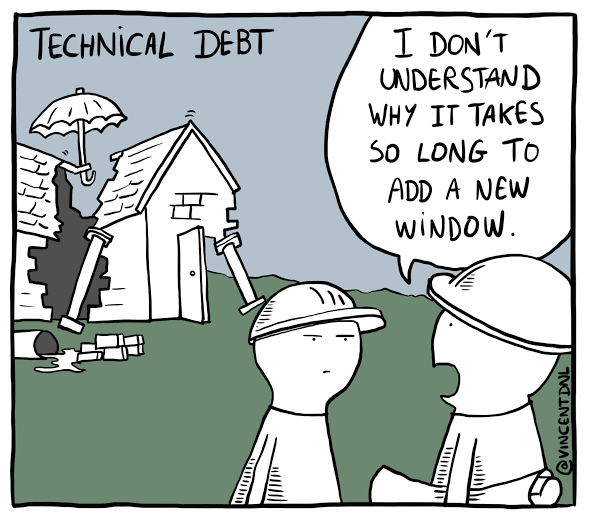
Custom AI Solutions
The True Cost of Tech Debt: Why Software Bottlenecks HappenWe all laugh at the programming memes, but technical debt and operational bottlenecks are the silent killers of enterprise software. Discover what actually causes these systemic slowdowns, how to identify them before your architecture collapses, and why modern engineering focuses on system flow over sheer coding speed.
5 Min Read
Custom AI Solutions
Beyond Microservices: Why 2026 is the Year of Event-Driven, Composable ArchitectureJust a few years ago, traditional microservices were the pinnacle of software engineering. Today, they are being replaced by "Composable Architecture." Dive into the tech trends defining 2026, and discover how event-driven data ecosystems are allowing enterprises to build software that functions like interchangeable LEGO bricks.
5 Min Read