
Zero Defects: Deploying Custom Machine Learning for Quality Assurance
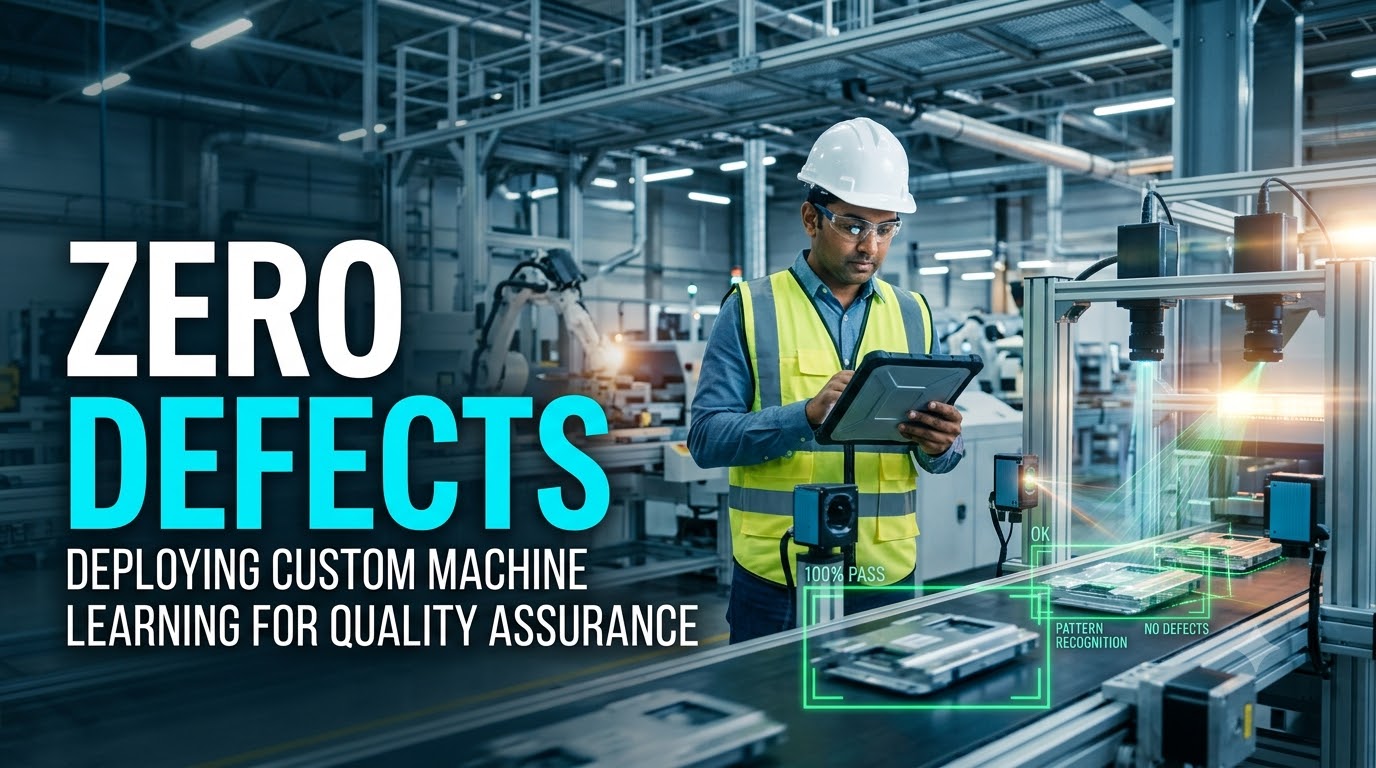
Humans performing visual inspections are time-consuming and prone to subjectivity and fatigue. In critical manufacturing situations, even one piece of faulty equipment getting through may lead to client recalls on a large scale. Learn how leading companies are working together with Isaii Technologies to implement Custom Machine Learning and Computer Vision models in order to have "Zero Defects" production.
By Isaii Team
Limitations of Human Inspection
Quality Assurance (QA) is the last line of defense for your products until they are delivered to your customers. The practice of factories inspecting each part manually for any damage, misalignment, or imperfections on the conveyor belt has been prevalent for decades now.
Although human inspectors are quite capable of performing their duties, they are limited by biological factors. After spending six hours looking at the same metal parts over and over again, fatigue kicks in and tiny fractures or even minor tolerance variations go unnoticed.
If any batch of faulty products ends up being delivered to a large-scale business, the repercussions will be huge.
> Revolution in Computer Vision
The most sophisticated factories are removing human error from the Quality Assurance process through the implementation of Computer Vision - one of the most specialized branches of Custom Machine Learning.
Computer Vision utilizes cameras placed above the assembly line, through which the AI processes visual information in split seconds, analyzing the physical object in comparison with its impeccable digital version.
-
Micrometric Precision: The AI is capable of detecting surface damage that may be measured in a fraction of millimeters, or the difference of color dye that is invisible to the naked eye.
-
Inexhaustible Checking: The AI is not prone to eye strain, nor does it have any trouble inspecting the 10,000th unit of the day with the same meticulousness as the first unit.
-
Immediate Elimination: Whenever an imperfection is detected, the AI sends an instruction to the pneumatic arm to dispose the defective object into the scrap heap.
> Custom AI Engineering Using Isaii
There are no "out-of-the-box" AI models that can be used to examine proprietary products. The AI algorithm should be engineered specifically to recognize the manufacturing tolerances particular to your company.
This is precisely the strength of the Custom AI Solutions engineers at Isaii Technologies.
We don't sell general algorithms. We collaborate with your engineering team to compile thousands of pictures of your specific products - both good and faulty. We develop, train, and deploy your proprietary Machine Learning model in the safety of your local factory environment.
As the AI is custom-engineered, it works seamlessly with your other processes. In case the Computer Vision algorithm finds an unexpected defect rate of your products coming off Assembly Line C, it can trigger the Isaii O&M system to shut down the machinery and call in the maintenance staff.
> Ensure Quality Control
Quality control is not a department in modern manufacturing industry. Quality is mathematics. Upgrading your QC process to Custom Machine Learning means zero human errors, significantly reduced client returns, and reputation security.
> Ensure the Quality of Your Goods
In the contemporary industrial world, quality is not a separate department but rather a matter of mathematical precision. With the help of the Custom Machine Learning upgrade for your QA process, you get rid of human mistakes, significantly cut down the return rate of clients and preserve your company’s reputation.
Engineering Perfection on a Grand Scale. Learn more about our Custom AI Solutions in the isaii.in AI Lab.
Next step
Interested in working together?
Tell us about your product or idea — we'd love to hear from you.
Continue reading
More articles

Custom AI Solutions
Community-Led Growth: Why Niche Professional Networks Are the Future of B2BBy 2026, the marketing guide of B2B is going to change drastically. Rather than using a generic social media strategy, organizations have realized the potential of CLG. Here we explore how niche professional networks represent the ultimate business tool of the decade and why the Isaii Business Forum has the unique framework that makes it happen.
4 Min Read
Custom AI Solutions
Why Generic AI is Failing the Supply Chain: The Need for Domain-Specific IntelligenceThrowing any old AI chatbot in your procurement process is a formula for failure. Making informed procurement choices calls for nuance, history, and specific data models. Find out what the global standard is for 2026 and why domain intelligence is vital to heavy industry. See why Isaii's Custom AI Solutions are perfect for the task.
4 Min Read
Custom AI Solutions
The Nearshoring Tech Mandate: Why Global Supply Chains Require Real-Time Visual LogisticsWith the advent of new geopolitical scenarios and new international regulations regarding international business, large corporations have no choice but to "nearshore" production facilities. In order to win such highly profitable international deals, regional logistic and warehousing organizations should provide complete transparency of tracking. Find out more about Isaii Transport Management System and Visual Inventory architecture.
4 Min Read